
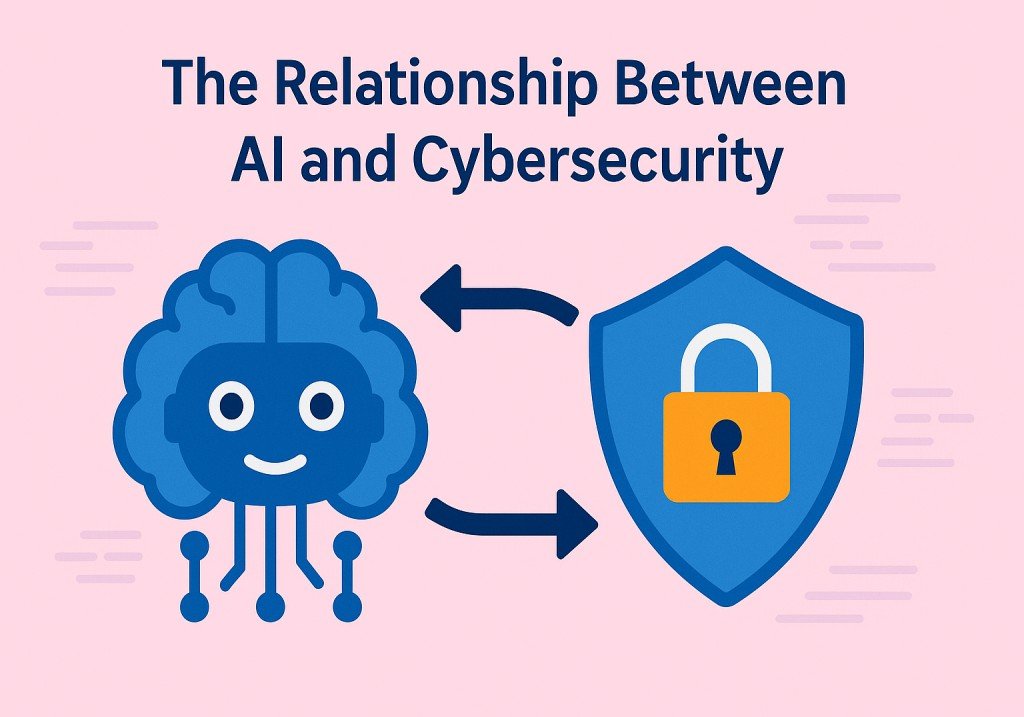

There is a significant relationship between AI and cybersecurity. AI is revolutionizing every facet of human life, and cybersecurity is no exception. It is the field of computer science that enables computer systems to mimic human intelligence. AI is like teaching machines to think and learn the way humans do, realistically, instead of just following fixed instructions. AI systems can analyze data, recognize patterns, and make decisions independently. As we move into an increasingly data-driven age, the cybersecurity risks associated with data breaches continue to increase. Cyberattacks can cause serious trouble not just by stealing money, but also by damaging your reputation, disrupting your daily operations, and in some cases, even threatening public safety or national security. The effects can be long-lasting and much more widespread than they first appear.
Just like other fields, the use of AI is transforming cybersecurity. It helps to detect threats faster, prevent cyber attacks, and protect your digital world more intelligently.
The connection between Artificial Intelligence (AI) and cybersecurity is both exciting and challenging. On one hand, AI helps us build smarter, stronger defenses; on the other, it can also open the door to new and more advanced types of cyber threats. It’s a dynamic relationship that brings both promise and risk.
In this blog post, we are going to explore the role of AI in the field of cybersecurity as well as cybercrime. We would explain at length how AI can be leveraged to benefit cybersecurity of your organization to equip you to prevent cyber attacks in an intelligent manner.
AI in Cybersecurity
On the contrary, hackers may use AI to conduct more sophisticated attacks. But, organizations should utilize AI to enhance their monitoring and defense mechanisms. So, AI is Pandora’s box, as it extends a great deal of power to both sides of the security spectrum.
AI in cybersecurity for increased protection
AI can enhance an organization’s overall cybersecurity strategy. With advanced threat detection and automated responses, AI technology transforms cybersecurity into a more automated and self-improving system.
AI is a vast field comprising Machine Learning (ML) and Natural Language Processing (NLP) techniques. ML models learn from historical data rather than being explicitly programmed. NLP enables computers to understand and process human language. Both AI techniques equip cybersecurity mechanisms to predict and flag any unusual activity and analyze text-based threats, for example, phishing emails that mislead users into exploiting them.
Now lets look at how AI helps cybersecurity professionals to protect in real time.
Real-time thread detection
AI plays a pivotal role in real-time threat detection by continuously monitoring network traffic, user behavior, and system activities. It quickly identifies anomalies such as unauthorized logins, unusual data access, or suspicious file movements. Unlike traditional systems, AI instantly evaluates context and reacts accordingly. AI system blocks threats, isolate affected systems, or notify security teams in real time. This shortens response times and helps prevent breaches before damage is done. Tools like CrowdStrike Falcon and Darktrace use AI to deliver proactive, intelligent defense. For instance, if a user logs in from two countries within minutes, these tools use AI to provide this level of monitoring.
Predictive Analysis and Proactive Defense
Predictive Analytics uses present and historical data to predict future events. So, beyond mere detection, AI can analyze historical and present data, emerging threat intelligence, and social media trends to predict future attacks. This way, it helps identify potential vulnerabilities before they can be exploited. This proactive approach allows organizations to strengthen their defenses, patch weaknesses, and allocate resources more effectively. For instance, an AI system might identify a surge in discussions about a specific software vulnerability on hacker forums, prompting security teams to prioritize patching that particular software across their infrastructure.
Phishing and Email Threat Protection
Phishing is a common way of tricking users by sending deceptive emails that appear legitimate. It becomes harder for the end user to identify identity theft using complex techniques like spoof emails, urgent messages, and phony websites.. Thanks to AI-driven solutions, email platforms enable users to detect phishing attempts based on tone, context, and structure, something traditional spam filters cannot do. As per estimates, Google’s AI algorithms reportedly block over 100 million phishing emails daily.
AI based threat detection
AI is like having a super-smart security guard who never sleeps and gets sharper every day. Instead of waiting for known threats to pop up, AI actively learns what “normal” looks like in your system. It instantly spots anything weird, like a sudden login from across the globe or strange data behavior. It sifts through mountains of activity in seconds, catching sneaky threats that humans might miss and alerting your team before real damage is done. By cutting through the noise and focusing on real danger, AI helps you stay ahead of cybercriminals—and gives your security team the edge they need to protect what matters most.
Behavioral Analytics
Behavioral analytics analyzes user behavior on online platforms, websites, and social media platforms. Therefore, it is paramount for businesses to identify patterns and trends from behavioral analytics and plan their promotional and marketing strategy, make informed decisions, and improve products and services for business growth. On the other hand, behavioral analytics in cybersecurity employs AI to monitor normal behavior and notice any deviant behavior, and devise a course of action before a cyber threat happens. It monitors not only users’ behavior but also the communication channels involved to proactively detect any potential breaches. As system has already built a user profile, now, for example, if a user suddenly accesses sensitive files at 3 AM or downloads large datasets outside their norm, the system raises red flags. This is how the relationship between AI and Cybersecurity reciprocates each other.
Real-time Monitoring and Incident Response
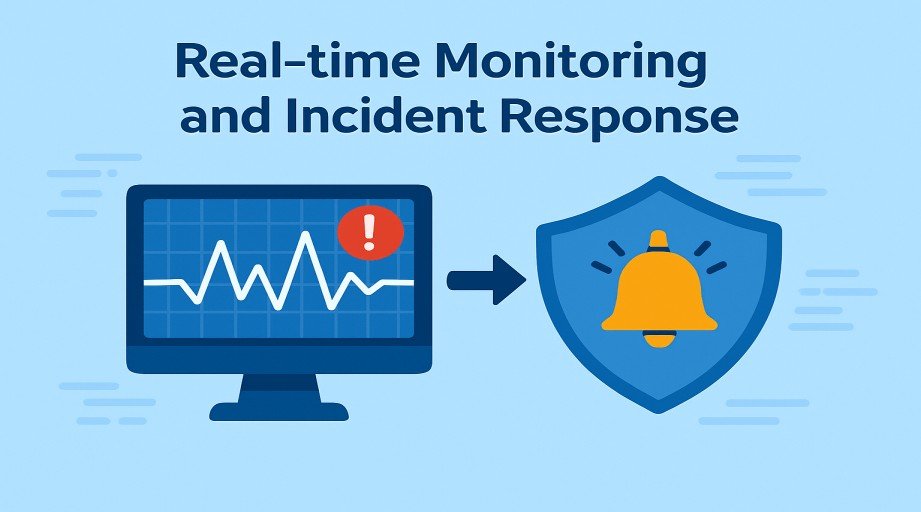
AI-powered systems engage in active monitoring of network traffic, analyz data flows to detect even the faintest signs of malware. This vigilant surveillance generates timely alerts to identify potential threats before they can inflict damage. AI swiftly organizes a comprehensive incident response as soon as a threat emerge. It deploys a range of measured actions designed to minimize impact and safeguard critical data. Rather than relying solely on established malware signatures, these advanced systems leverage sophisticated behavioral analysis. This analysis uncovers new and emerging threats. By understanding the unique patterns of malicious activity, AI can identify dangers that have yet to be recognized by traditional means. This innovative approach significantly shortens the window between the creation of malware and its detection. This way organizations maintain a proactive defense against the ever-evolving landscape of cyber threats.
AI as a potential threat to Cybersecurity
Besides AI’s proactive role in cybersecurity, it can also pose challenges and threats to it.
Though the partnership between cybersecurity and AI holds incredible potential to strengthen digital defenses, it’s not without its risks. The same powerful technology that helps protect us can also be against us. Cybercriminals are getting smarter—and they’re learning how to use AI to their advantage.
Imagine AI is not just for good, but to power highly convincing social engineering attacks. Hackers can automate these scams to target people on a psychological level. They can trick them into revealing sensitive information without even realizing it. It’s not just about stolen data, it’s about manipulating trust.
Then there’s the unsettling rise of deepfake technology. Deepfakes using AI can create realistic fake videos or voice clips that mimic real people. It can be a company executive, a family member, or a public figure. The result? Identity theft, misinformation, and a new wave of cyber deception that’s harder to spot than ever.
AI systems themselves aren’t immune, either. Hackers can manipulate the very algorithms designed to protect us. They may feed them false or misleading data that causes these systems to make incorrect decisions. It is like confusing a smart guard dog into letting the intruder walk right through the front door.
Even more troubling, attackers are developing smart malware specifically designed to outsmart AI-based detection tools. These threats can adapt, hide, and evolve—slipping through traditional defenses without a trace.
In today’s fast-moving digital landscape, cybersecurity experts around the world are not just focusing on how AI can help. They go beyond and understand its misuse. Understanding these risks is not about fear but it is about readiness. To stay a step ahead, it is rudimental to know more how attackers can weaponize AI. It can help to build systems and strategies in a better way.
Alarming Statistics on AI-Driven Cyber Threats
- 74% of security professionals acknowledge that AI-powered cyber threats are significantly impacting their organizations.
- AI-powered cyberattacks can automate and enhance various phases of a cyberattack, including identifying vulnerabilities and deploying sophisticated attack vectors.
- Scammers use Audio deepfakes. As per 2023 McAfee survey, AI voice cloning scams targeted 1 in 10 people, where 77% of those targeted lost money.
- Infostealer malware, often enhanced by AI, was responsible for stealing 2.1 billion credentials in 2024, accounting for over 60% of all credentials stolen that year.
- A survey by venture capital firm Team8 found that AI-driven phishing and deepfake fraud attacks are among the most significant threats, with phishing emails and credential phishing incidents surging dramatically since late 2022.
- The AI cybersecurity market is rapidly expanding, valued at $24.82 billion in 2024 and projected to reach $146.5 billion by 2034, reflecting the growing need to counter AI-enhanced cyber threats.
These stats make one thing clear: AI in cybersecurity is both a powerful ally and a potential threat. While it helps us build smarter defenses and respond to attacks faster, it also gives cybercriminals new tools to launch more advanced and harder-to-spot attacks. As AI evolves, so do the risks. That’s why staying informed and investing in reliable, AI-driven security measures is no longer optional—it’s a critical step in protecting our systems, data, and digital lives.




Hi
Pingback: Artificial Intelligence and Cybersecurity: A Powerful Alliance Against Hackers